
Why We Started Traveling with Our Kids Before Age 3
The conversation happened over coffee with my sister-in-law. She meant well when she said, "Why bother? They won't even remember it." We'd just mentioned booking flights to Tasmania with our 18-month-old. The look on her face said what she didn't: you're being selfish.
That comment stuck. Not because it was cruel, but because part of me wondered if she was right. Were we dragging our toddler across the country for our benefit, not hers? Would the stress, the disrupted sleep, the airport chaos be worth it for experiences she'd forget by age five?
This article isn't about proving anyone wrong. It's about what actually happened when we stopped waiting for the "right time" and just went.
The Guilt We Carried (And Why It Was Misplaced)
The guilt felt specific: wanting to see new places when our daughter wouldn't consciously remember them seemed indulgent. My mum suggested we wait until she was "old enough to appreciate it." A colleague asked if we'd considered how much easier it would be in a few years.
They weren't wrong about the memory part. She won't recall the ferry ride or the beach we visited. But that's not how early development works.
Research shows that play fosters cognitive development in problem-solving, creativity, and understanding even without explicit memory formation. The experiences shape neural pathways. The novelty builds adaptability. The unstructured exploration teaches things no playroom can replicate.
Our home routine was solid: structured meal times, predictable nap schedules, the same toys rotated weekly. Travel offered something different. Unstructured learning. New textures, sounds, problems to solve. Not better than home, just different.
I'm not dismissing the guilt. It was real. But it was also based on the assumption that value only exists in what we consciously remember. That's not how toddlers learn.
What Actually Happened on Our First Trip (Spoiler: Not What We Expected)

We flew to Hobart when our daughter was 18 months old. I packed like we were moving permanently: three changes of clothes per day, every snack she'd ever eaten, backup toys for the backup toys. My partner laughed at the suitcase weight. I didn't care. I was prepared for disaster.
The specific fear? A two-hour meltdown at 30,000 feet with nowhere to escape. I'd rehearsed apologies to surrounding passengers in my head.
Within the first day, something shifted. Not because everything went perfectly. It didn't. She refused to sleep in the portable cot and spent the first night in our bed, kicking me in the ribs every forty minutes. But the daytime? Completely different to what I'd imagined.
The airport meltdown that never came
I'd prepared for chaos. Snack bags organised by preference. Three new toys wrapped like presents to unveil strategically. A detailed plan for gate delays.
She didn't need any of it. The airport itself was the entertainment. Watching suitcases on the baggage carousel. Pointing at planes through the window. Waving at strangers. The stimulation kept her engaged in ways our living room never did.
This connects to something I didn't understand then: early childhood education encourages creativity, problem-solving, and critical thinking through new environments. The airport wasn't stressful for her. It was fascinating. Every corner offered something to process, categorise, understand.
Did we get lucky? Probably. Some kids would have hated it. But the environment helped. The novelty gave her brain work to do that wasn't just "sit still and be quiet."
How routine became portable (and easier than at home)
Bedtime at home involved a specific sequence: bath, specific pyjamas, three books in order, white noise machine, blackout curtains. I assumed travel would destroy this.
Instead, we simplified. One book. A familiar blanket. The same lullaby. That's it. And somehow, it worked better. Less fuss. Faster sleep. She adapted within two nights.
The revelation wasn't that routines don't matter. It's that I'd built complexity that served my anxiety more than her needs. Travel forced simplification, and she responded to the clarity.
She adjusted faster than I did. I kept reaching for things we didn't pack. She just moved on.
The unexpected cognitive leap we noticed mid-trip
On day three, she started problem-solving in ways I hadn't seen before. We were at a café. She wanted a napkin from the table next to us. Instead of pointing and whining (her usual approach), she walked over, made eye contact with the woman sitting there, and pointed at the napkin holder.
Small moment. But new behaviour. At home, she'd have just escalated until I intervened.
I can't prove the travel caused it. But the timing wasn't coincidental. New environment. New problems. No familiar shortcuts. Play supports cognitive development by requiring children to navigate situations without preset solutions.
She had to figure things out. And she did.
Three Things That Changed in Our Child (That We Didn't Anticipate)
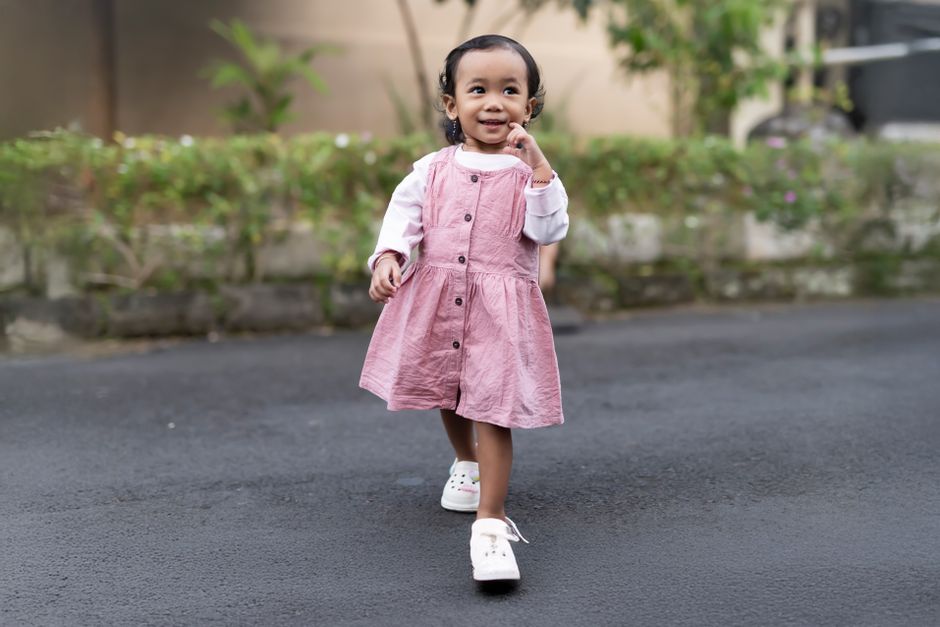
These weren't goals we set. We didn't travel to "build resilience" or "improve social skills." We just wanted a break from Melbourne winter. But when we got home, the changes were obvious.
Adaptability became their default setting
Before travel, a change in dinner routine could trigger a 20-minute meltdown. New foods were rejected on sight. A different park meant clinging to my leg for ten minutes before she'd explore.
After? She still had preferences. But the rigidity softened. We introduced a new vegetable. She tried it. We visited a friend's house she'd never been to. She walked in and started playing within minutes.
The research backs this up: free play promotes social and emotional skills by requiring children to navigate unfamiliar scenarios. Travel is unstructured play at scale. Everything is new. She learned that new doesn't mean threatening.
She still has meltdowns. But her baseline tolerance for change increased noticeably.
Social confidence with strangers skyrocketed
In Hobart, she interacted with hotel staff, waved at people in cafés, played alongside other kids at a playground without needing me as a buffer. Not because she suddenly became extroverted, but because the sheer volume of new faces normalised interaction.
Back home, this translated. At the supermarket, she started greeting the checkout person. At playgroup, she approached other kids instead of waiting for them to approach her.
Her personality didn't change. She's still cautious. But her comfort zone expanded. Dramatic and imaginative play helps develop social skills such as negotiation, empathy, and self-confidence. Travel forced constant low-stakes social practice.
Problem-solving showed up in unexpected moments
A week after we returned, she couldn't reach a toy on a shelf. Instead of crying for help, she dragged a cushion over, stood on it, and grabbed the toy herself.
This wasn't genius-level thinking. It was age-appropriate problem-solving. But it was new. Before travel, she'd have just escalated until I solved it for her.
Travel removed familiar crutches. She couldn't rely on me knowing exactly what she wanted or anticipating every need. She had to communicate more clearly, try solutions, adapt when they didn't work.
The cognitive development research is clear: play fosters cognitive development in problem-solving and creativity. Travel is just play in an unfamiliar context.
What Changed in Us as Parents
The trip changed how we parent. Not dramatically, but noticeably.
We stopped waiting for the 'right time'
Before travel, we'd postponed things. "We'll go to that restaurant when she's older." "We'll visit friends interstate when it's easier." "We'll try that activity when she can appreciate it."
Travel proved that waiting was arbitrary. Yes, some things are genuinely age-inappropriate. But most of our waiting was about our comfort, not her capability.
After Hobart, we stopped postponing. We took her to a nice restaurant. She didn't destroy it. We visited friends in Sydney. It was fine. Not perfect, but fine.
This isn't about recklessness. It's about questioning whether "later" is actually better or just easier to imagine.
Our definition of 'quality time' completely shifted
Before travel, quality time meant structured activities. Educational toys. Planned outings to child-friendly venues. Everything had a purpose.
Travel taught us that unstructured exploration mattered more. Wandering through a market. Sitting on a beach throwing stones. Watching her figure out how a gate latch works.
The research supports balance: studies show that children learn best through a combination of structured and unstructured experiences. We'd leaned too heavily on structure. Travel corrected that.
We still do structured activities. But we value the unstructured time more now.
The Real Trade-Offs (Because It's Not All Sunshine)
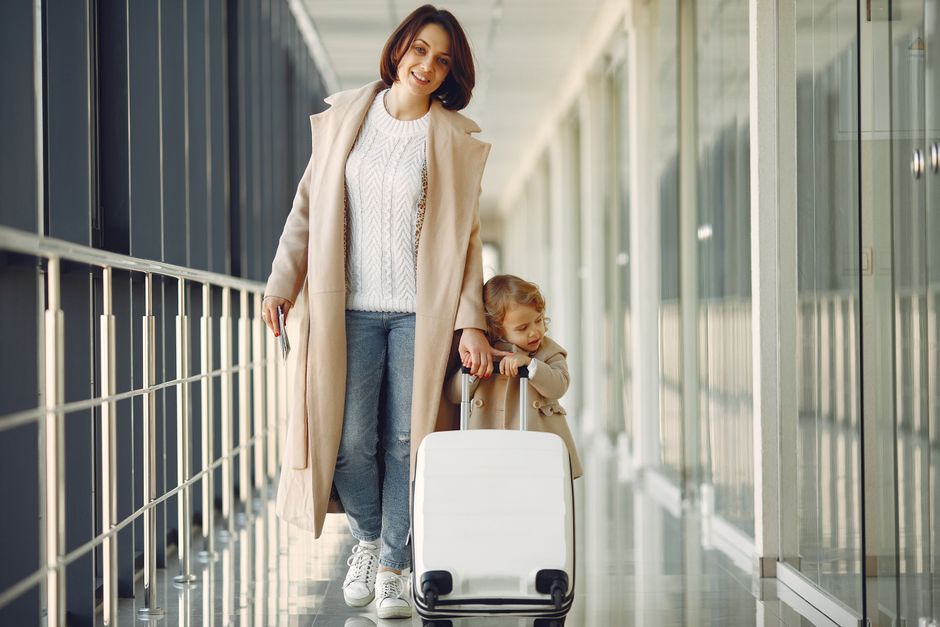
Travel with a toddler isn't easy. Anyone who says otherwise is lying or has forgotten.
What we gave up (and whether it mattered)
We spent $1,800 on a trip we could have postponed. That money could have gone toward her education fund or home improvements. We sacrificed comfort: sleeping in an unfamiliar bed, eating at odd times, managing her needs in public spaces without our usual tools.
We gave up predictability. At home, I know her schedule to the minute. On the trip, everything was approximate.
Would I make the same trade-offs again? Yes. But I'd reconsider the accommodation. We booked a hotel. An apartment with a kitchen would have reduced stress significantly.
What do I miss about pre-travel life? The certainty. Knowing exactly how each day would unfold. That's gone now, and sometimes I want it back.
The logistics that actually were harder
Packing was genuinely harder than staying home. Not just more work, but more mental load. Anticipating needs without overpacking. Remembering medications, comfort items, weather-appropriate clothing.
Naps were harder. At home, she naps in her cot in a dark room. On the trip, she napped in the pram, in the car, on me. Less consistent. Lower quality sleep. That affected her mood and ours.
Meals were harder at 18 months specifically. She was past purees but not yet eating everything we ate. Finding appropriate food in restaurants required more planning than I'd anticipated.
Some of this got easier with practice. Some of it is just hard at certain ages. I don't have solutions for everything. Sometimes you just endure it because the trade-off is worth it.
Why We'd Make the Same Choice Again
The guilt my sister-in-law triggered was misplaced. Not because she was wrong about memory, but because memory isn't the point. Early childhood education is crucial for children's cognitive development, and travel is education without a classroom.
The most important change wasn't in our daughter. It was in our family dynamic. We learned we could handle uncertainty together. We learned she was more capable than we gave her credit for. We learned that "later" often means "never."
If you're considering travel with a toddler, here's what actually matters: let go of perfection. Your child won't remember the destinations, but their brain will remember the challenge of adapting. Simplify your routines instead of trying to replicate home exactly. Pack less than you think you need.
And if you need help planning a trip that actually works for your family's specific needs, Toddler Vacay specialises in creating realistic itineraries for families with young children. They understand the difference between theoretical advice and what actually works when you're managing a toddler in an airport.
Different families make different choices. Some will wait. Some won't travel at all. Both are valid. But if the only thing stopping you is the belief that your child won't remember it, that's not a good enough reason to wait.


