
When Are Toddlers Ready to Travel? What the Data Actually Shows
You're not looking for permission to take your toddler on a plane. You're looking for proof that you're not making a terrible mistake.
The question isn't really "Is my toddler too young?" It's "Will I regret this?" And the honest answer is: maybe, but probably not for the reasons you think.
Most parenting advice on toddler travel is opinion dressed up as expertise. This article uses actual medical guidelines, behavioural research, and hindsight data from parents who've already done it. You'll get specific age ranges, real risk assessments, and a readiness checklist that doesn't rely on your gut.
We're not promising this will be easy. We're promising clarity. If you're medically cleared, reasonably prepared, and willing to accept that a few hard hours won't scar anyone permanently, you're closer to ready than you think. For more practical guidance on family travel planning, visit our homepage.
The Question Every Parent Googles at 2am
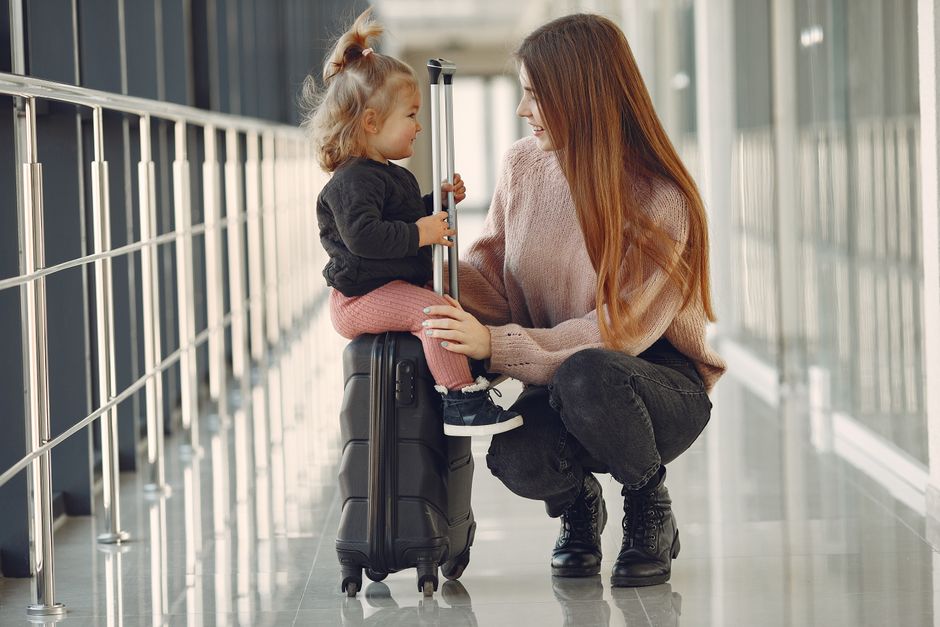
It's 2am. You're awake. Again. And you're typing: "Is my toddler too young to fly?"
The real question underneath is: "Am I being selfish? Will this traumatise them?"
You've read the conflicting advice. One blog says wait until they're three. Another says infants are easier. Instagram shows families with perfectly behaved toddlers on beaches. Your mother-in-law thinks you're mad. Your friend who travelled with a six-month-old makes it sound breezy. You feel judged either way.
Here's what makes this harder: over 30% of adults experience anxiety when flying. If you're already anxious about flying yourself, you're now worried about your own fear and your toddler's reaction. That's a lot of pressure.
You're not overthinking this. But you might be asking the wrong question. The issue isn't whether they're too young. It's whether you're prepared for what "young" actually means on a plane.
What the Data Actually Says About Toddler Travel
Let's replace gut-feel parenting advice with evidence.
There are three dimensions to "readiness": medical safety, developmental timing, and what parents who've already done this wish they'd known. Each answers a different version of the question. Medical safety tells you when it's physically safe. Developmental timing tells you when it's behaviourally easier. Hindsight tells you what actually matters.
When Toddlers Are Medically Cleared to Fly
Most airlines allow infants from two days old. Paediatricians recommend waiting until four to six weeks minimum, mostly to protect newborns' developing immune systems and give parents time to recover from birth.
After three months, there are no age-based medical restrictions for healthy toddlers. Full stop.
Premature babies or toddlers with respiratory or heart conditions need GP clearance before flying. If your toddler has ongoing health issues, check first. Otherwise, they're cleared.
Here's what "medically cleared" doesn't mean: easy. It just means safe. A six-month-old might sleep through the whole flight. An 18-month-old might scream for two hours. Both are medically fine. One is significantly harder work.
The Age Range Where Travel Gets Easier (and Why)
There are two "sweet spot" ages: six to twelve months and three years plus.
Six to twelve months: they're not mobile yet, they nap easily, and they're entertained by faces and simple toys. You can hold them for most of the flight. Nappy changes are annoying but manageable.
Three years plus: they understand instructions, they can be entertained by screens, and you can reason with them (sometimes). They'll sit in their own seat. They might even enjoy the experience.
The hardest age? Twelve to twenty-four months. They're mobile, curious, and have the attention span of a goldfish. You can't reason with them. They don't want to sit still. They want to explore the plane, touch everything, and run up and down the aisle. Good luck.
Every age has trade-offs. Nappy changes versus boredom versus endless questions. There's no perfect age. There's just the age your toddler happens to be when you need to travel.
What Parents Regret More: Going or Waiting
Here's the surprising bit: in hindsight surveys, parents regret waiting more than going early.
Why? Because toddlers don't remember the trip anyway. But parents remember missing family events, delaying experiences, or putting life on hold for years waiting for the "right" age.
The caveat: parents who went unprepared do regret it. But preparation matters more than age. A well-prepared trip with a 15-month-old beats a chaotic trip with a three-year-old.
The question isn't "Are they ready?" It's "Are you prepared?" If you've thought through naps, snacks, entertainment, and your own stress response, you're already ahead of most people.
The Real Risks Parents Worry About (and What to Actually Watch For)

Let's shift from "Should we go?" to "What are we actually afraid of?"
The three biggest fears: getting sick, ear pain, and total meltdowns. We're not dismissing these. We're giving you the actual odds and practical solutions.
Immune System Concerns on Planes
The fear: recycled air, strangers coughing, toddlers touching everything.
The reality: plane air is HEPA-filtered. It's cleaner than most indoor spaces, including your local shopping centre. Your toddler is exposed to more germs at daycare or playgroup than on a plane.
What actually matters: hand hygiene, avoiding obviously sick passengers nearby, and your toddler's baseline health. If they're already fighting a cold, their immune system is compromised. If they're healthy, they're fine.
Practical steps: wipes for tray tables, hand sanitiser after they touch anything, and keeping their hands away from their face (good luck with that last one).
We're not saying there's nothing to worry about. We're saying here's what actually reduces risk.
Ear Pressure and Pain During Takeoff
This happens because toddlers can't equalise ear pressure by yawning or swallowing on command.
The fix: feed them during ascent and descent. Bottle, breast, or snack. Anything that makes them swallow. A dummy works for younger toddlers.
Most toddlers cry briefly, then adjust. It's uncomfortable, not dangerous. If they have a cold or ear infection, pressure can be more painful. Check with your GP first if they're congested.
This sounds simple. It rarely is. Timing the feed perfectly while managing your own stress and other passengers' judgement is hard. But it's manageable.
Disrupted Sleep and Routine Meltdowns
This is the most common actual problem. Overtired toddlers are hard work anywhere. On a plane, they're worse.
Routine disruption is inevitable. You can minimise it: book flights during nap time, bring comfort items, accept lower standards. But you can't eliminate it.
Meltdowns will happen. Other passengers have survived it. You will too. The flight attendants have seen worse. The person glaring at you will forget about it in an hour.
Reframe it: a few hard hours versus weeks of anticipatory anxiety. Which is actually worse?
How to Know If Your Toddler Is Ready (Beyond Age)

Age matters less than temperament and your preparation.
This isn't about being "ready" in an absolute sense. It's about knowing what you're signing up for. The three subsections below are a decision-making framework, not a pass/fail test.
The 3-Question Readiness Test
Ask yourself three specific questions:
1. Can your toddler sit still for 20+ minutes with snacks or screens?
2. Are they currently healthy? No illness, ear infections, or recent vaccinations causing discomfort?
3. Can you stay calm when they're upset in public?
If you answered yes to all three, you're as ready as you'll ever be.
Notice that question three is about you, not them. Your anxiety will amplify theirs. If you're visibly stressed, they'll pick up on it. If you can stay calm (or fake it convincingly), they'll settle faster.
This isn't pass/fail. It's "know what you're working with."
Red Flags That Mean 'Wait a Few Months'
Specific red flags: current illness, recent surgery, severe separation anxiety, or you're in survival mode with a new sibling.
These aren't permanent. They're temporary states that make travel harder than it needs to be. Waiting isn't failure. It's strategic timing.
If your toddler is sick, they'll be miserable. If you're barely coping at home, adding travel stress won't help. Wait until you're both in a better place.
This is "not yet," not "never."
Green Lights That You're Good to Go
Green lights: your toddler is healthy, you've done a practice run (long car trip or restaurant outing), you have a co-parent or support person, and you've packed strategically.
You don't need all of these. But having most means you're better prepared than you think.
Even with green lights, it won't be perfect. But it will be doable. When you're ready to explore family-friendly options, check out our Destinations page or Compare different locations to find what suits your family best.
You'll Never Feel 100% Ready (and That's the Point)
Circle back to that 2am Google search. You're looking for permission, not perfection.
Parenting is full of "too soon" decisions. First daycare drop-off. First sleepover. First flight. You never feel completely ready. You do it anyway.
Reframe the question. Instead of "Are they too young?" ask "What's the worst that happens?" The honest answer: a few hard hours, some judgmental looks, maybe a ruined outfit. Then you're home. Or at your destination. And life continues.
If they're medically cleared, you've prepared, and you're willing to be flexible, go. You'll figure it out. Thousands of parents do this every day with toddlers younger, louder, and less cooperative than yours.
Your preparation can model calm for your toddler. If you're anxious, they'll sense it. If you're confident (or faking it well), they'll follow your lead. You might even break the cycle of flight anxiety before it starts.
You're not being selfish. You're living your life with a toddler in it. That's allowed.


