
Why We Created a 'Family Travel Vision' (And How It Changed Everything)
Most families plan travel by choosing a destination, booking accommodation, and filling the days with activities. It's logical. It's what everyone does. And for years, we did it too.
But something was missing. The trips felt more like endurance tests than adventures. The kids were exhausted. We were stressed. And despite ticking off impressive destinations, we'd come home feeling like we'd missed the point entirely.
That's when we realised we needed something different. Not a better itinerary. Not a more exotic location. We needed a framework that guided how we travelled, not just where we went. We called it our family travel vision, and it changed everything.
This isn't about perfection or Instagram-worthy moments. It's about intentionality. It's for parents who sense that travel could offer more than chaos and photo ops, but aren't sure how to get there.
The Moment We Realised We Were Travelling Wrong

Picture this: you've spent months planning a family trip. You've researched attractions, booked tickets, mapped out each day. You arrive, and immediately the pressure starts. The kids are overstimulated. Someone's always tired or hungry at the wrong time. You're rushing from one must-see sight to the next, checking boxes, taking photos you'll barely look at later.
By day three, you're wondering why you bothered.
That was us. Repeatedly. Until a camping trip in 2014 in the South of France between Nice and Saint-Tropez changed our perspective entirely.
We had no agenda. No packed schedule. Just time. The kids played. We cooked simple meals. We walked when we felt like it and rested when we didn't. And for the first time in years of family travel, we felt present. Calm. Connected.
The contrast was stark. Before that trip, travel felt performative. We were doing what families are supposed to do: seeing famous places, creating memories, proving we were good parents who exposed our kids to the world. But we weren't actually enjoying it. Neither were the kids.
That week in France showed us what travel could be when you stopped trying to maximise every moment and started protecting the moments that actually mattered.
What a 'Family Travel Vision' Actually Means (And What It Isn't)
A family travel vision is a set of guiding principles based on your family's values, needs, and what you want travel to cultivate in your children. It's not complicated. It doesn't require a workshop or a consultant. It's simply about shifting focus from where you go to why and how you go, seeking deeper meaning instead of just ticking off destinations.
This is about intentionality. Choosing experiences that align with what matters most to your specific family. Not what looks good on social media. Not what other families are doing. What works for you.
For us, that meant prioritising presence over packed itineraries. Calm over constant stimulation. Connection over impressive sights. Your vision will likely look different. That's the point.
It's not a bucket list or itinerary
Let's be clear: a vision isn't a list of places you want to visit or a detailed day-by-day plan. Those have their place, but they're not the same thing.
A bucket list says "visit Paris." A vision says "prioritise cultural immersion over sightseeing marathons." One is a destination. The other is an approach.
The vision informs everything else. It tells you how to experience Paris if you go there. Whether to spend three days rushing through museums or a week living in one neighbourhood, shopping at local markets, and letting the kids play in parks where Parisian families actually spend time.
Bucket lists aren't bad. But without a vision guiding them, they often lead to the same rushed, stressful travel we were trying to escape.
It's a filter for every travel decision you make
Once you have a vision, it becomes decision-making criteria for everything. Destination choice. Accommodation type. How you spend each day. Even how you get there.
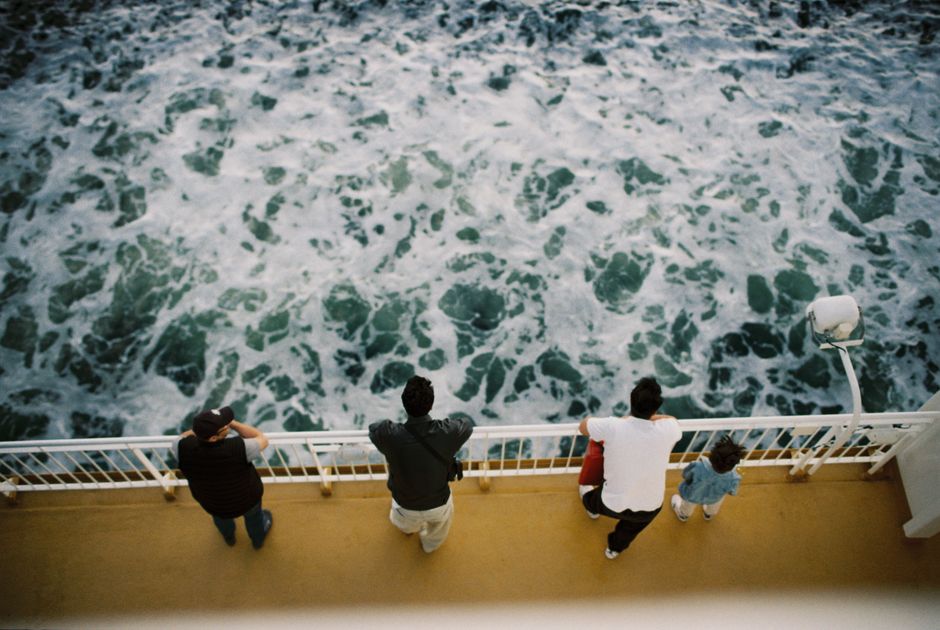
For example, our vision led us to choose ferry travel over flying, despite longer journey times. Ferries reduce stress, allow us to travel with our dog, and avoid crowded airports. The journey itself becomes part of the experience, not just a necessary inconvenience.
It's why we spend weeks in one location instead of rushing through multiple cities. Why we plan around energy levels rather than attraction opening hours. Why we chose France repeatedly, not because it's objectively the best destination, but because its blend of accessibility, culture, and calm aligns with our slow travel philosophy.
Every decision filters through the same question: does this serve our vision, or does it compromise it?
The Three Questions That Shaped Our Vision
We didn't sit down with a blank page and magically produce a fully formed vision. It emerged from asking ourselves three core questions. These aren't prescriptive. They're reflective prompts that helped us clarify what mattered most.
You can use them to develop your own vision. The answers will be different for every family. That's exactly as it should be.
What do we want our kids to feel during travel, not just see?
This question shifted everything. We'd been so focused on what our kids would see and do that we'd ignored how they'd feel while doing it.
Did we want them to feel rushed and overstimulated? Exhausted and irritable? Or did we want them to feel curious, secure, and free to explore at their own pace?
For our neurodivergent teen, this became especially important. Loose routines, minimal stimulation, and comfortable accommodation weren't luxuries. They were necessities for travel that felt good instead of overwhelming.
We prioritised feelings like presence, wonder, and confidence. Not every moment needed to be exciting. Some of the best moments were quiet: morning croissants, midday walks, restful afternoons where nothing much happened except being together.
This is personal. Your family might thrive on adventure and spontaneity. Ours needed calm and predictability. Neither is wrong. The point is choosing consciously.
What kind of travellers do we want to become as a family?
Every family has a travel identity, whether they've named it or not. Adventurous or comfortable. Fast-paced or slow. Surface-level or immersive.
We chose to be slow, intentional travellers who prioritise presence over packed itineraries. That identity shows up in everything we do. The simple daily routines. The extended stays. The willingness to spend an entire summer in one region rather than cramming in multiple countries.
This isn't about being superior to families who travel differently. It's about conscious choice aligned with values. If you want to be adventurous travellers who seek thrills and push boundaries, brilliant. Build your vision around that. Just make sure it's deliberate, not default.
What are we willing to sacrifice to protect this vision?
Here's the uncomfortable truth: having a vision means saying no to things that don't serve it. Even appealing things.
We sacrifice speed. We choose longer ferry journeys over quick flights. We sacrifice variety. We spend weeks in one place instead of seven places in seven days. We sacrifice the bragging rights that come with an impressive list of countries visited.
But sacrifice isn't deprivation. It's choosing what matters most over what's merely appealing. We're not missing out. We're protecting something more valuable than novelty.
If you're not willing to sacrifice anything, you don't really have a vision. You have preferences. And preferences collapse under pressure.
How Our Vision Changed What We Actually Do
Philosophy is useless without application. Our vision created tangible, observable differences in how we travel. These aren't theoretical improvements. They're practical changes that make every trip better.
We swapped flights for ferries (even when it takes longer)
This decision confuses people. Ferries take longer. They're less convenient. Why bother?
Because our vision prioritises calm, connected travel where the journey itself matters. Ferries let us travel with our dog. They avoid the stress of crowded airports, security queues, and cramped seats. The journey becomes part of the experience, not something to endure.
Yes, it costs us time. But it saves us stress, keeps the family together (including pets), and aligns with our values. That trade-off is worth it for us. It might not be for you. That's fine.
We choose one place for weeks instead of seven places in seven days
This year, we're spending nearly the entire summer in the Loire Valley, France. One region. Weeks and weeks.
This isn't laziness. It's intentional design. Extended stays let the kids settle in, establish routines, and experience daily life rather than just tourist highlights. There's no constant packing and moving. No exhaustion from perpetual transition.
We value depth over breadth. Presence over packed itineraries. Slow travel isn't about seeing less. It's about experiencing more of what you do see.
Families using resources like Toddler Vacay often discover that longer stays in fewer locations reduce stress and increase genuine connection, especially with young children who need routine and familiarity.
We plan around energy levels, not attractions
Our daily planning prioritises family energy and wellbeing over maximising sightseeing. Morning croissants. Midday walks. Restful afternoons. Loose schedules that accommodate everyone's needs, especially our neurodivergent teen.
This creates space for spontaneity, rest, and genuine enjoyment. We're not lazy. We're sustainable. Travel that exhausts you isn't worth doing.
Some days we do very little. And those days are often the ones we remember most fondly.
Why This Matters More Than Your Next Destination
Here's what we learned: without a vision, even amazing destinations feel empty or stressful. The Eiffel Tower doesn't magically create connection. The Colosseum doesn't automatically teach your kids resilience. Where you go only becomes meaningful when guided by a clear why and how that reflects your family's values.
Research shows that purpose comes from small daily actions that bring joy, not grand destinations or bucket-list achievements. The morning croissant matters more than the famous monument. The quiet afternoon matters more than the packed itinerary.
Before you book your next trip, develop your vision. Ask the three questions. Decide what kind of travellers you want to be. Identify what you're willing to sacrifice to protect what matters most.
The vision transforms every destination. It turns travel from something you endure into something that genuinely nourishes your family. And that's worth more than any passport stamp.
If you're ready to create more intentional family travel experiences but need guidance on destinations that align with your values, Toddler Vacay specialises in helping families find locations and approaches that work for their specific needs. Sometimes having an expert perspective makes all the difference.


