The Efficient Packing System That Saves Time Without Forgetting Anything
You're leaving in two hours. Your toddler is 'helping' by unpacking the nappy bag. Again. You're standing in front of the wardrobe wondering if three spare outfits is enough or if you should pack five. The mental checklist is spiralling: sunscreen, wipes, that specific toy they can't sleep without, spare shoes in case it rains, the medication you might need, snacks for the car.
This doesn't have to take 90 minutes of second-guessing and stress. The system below cuts that time in half by removing the decisions that slow you down. Not by packing less. By packing smarter.
Why Packing for Your Toddler Takes Twice as Long as It Should
The problem isn't that you're slow. It's that you're making the same decisions from scratch every single trip.
Decision fatigue is the real time drain. Every item becomes a question: do we need this? What if they spill something? Should I pack the backup comfort toy or just the main one? You're not just packing. You're running risk assessments on hypothetical scenarios.
Then there's the 'what if' spiral. What if it's colder than expected? What if we go somewhere nice? What if they need a costume for an impromptu dress-up party? This adds 15 to 20 minutes of items you'll never use, plus the mental load of deciding whether to include them.
Most parents pack everything from scratch each time because they don't have a system. They start with a vague idea of what's needed and build the list in real time while their toddler demands attention. That's exhausting and inefficient.
The Three-Zone System That Eliminates Decision Fatigue
The fix is simple: divide items by when you pack them, not by what they are.
This removes the paralysis of 'where do I start?' You're not staring at an empty bag wondering what goes in first. You know exactly what gets packed when, because the system matches how you actually move through the days before a trip.
Zone 1 is the 48-hour pre-pack. Everything that won't be used in daily life before you leave. Zone 2 is the morning-of grab bag. Daily essentials you need right up until departure. Zone 3 is the door-check pocket list. The final 30-second scan before walking out.
This works because it stops you fighting against natural packing rhythms. You're not trying to pack the toothbrush two days early or leaving nappies until the last minute.
Zone 1: The 48-Hour Pre-Pack (Everything That Doesn't Move)
This is where 70 to 80% of your bag gets sorted while you're calm and unhurried.
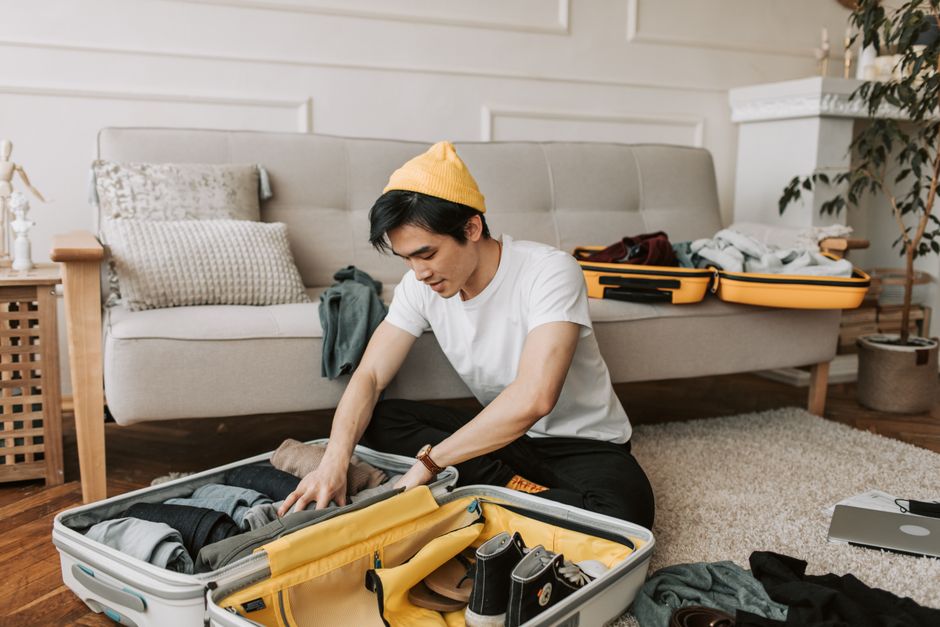
Pack anything not needed in the 48 hours before departure: spare clothes, nappies, wipes, sunscreen, first aid kit, travel toys, portable high chair if you're taking one, swim gear, extra shoes. If your toddler won't touch it before you leave, it goes in now.
Keep a dedicated toddler travel bag that stays partially packed between trips. Sunscreen, first aid supplies, and travel-specific toys can live in there permanently. You're not starting from zero each time.
Don't pack items they'll need tomorrow morning. That's Zone 2's job.
Zone 2: The Morning-Of Grab Bag (Daily Essentials Only)
This zone takes five minutes maximum because the list is predetermined.
Pack only what's used right up until departure morning: toothbrush, current comfort toy, any medications, phone charger, snacks for the journey, the drink bottle they use at breakfast.
Keep a printed checklist stuck to the fridge or in this bag's pocket. No thinking required. Just tick and pack.
If it could have been packed yesterday, it doesn't belong here. Keep this zone minimal.
Zone 3: The Door-Check Pocket List (Last-Minute Must-Haves)
This is your 30-second final scan before the door closes behind you.
Wallet. Keys. Phone. Passports or ID. Tickets. Your toddler's comfort item. That's it.
Keep this list on a card in your wallet or set it as your phone lock screen. Travel experts recommend checking documents and prescriptions before departure to avoid the panicked realisation in the car that something critical is missing.
This prevents the 'did I forget something?' spiral that adds 10 minutes of rechecking bags you've already packed.
The Five-Minute Toddler Outfit Formula (No More Wardrobe Spirals)

Clothing decisions are the single biggest time drain in toddler packing. Not because choosing clothes is hard. Because you're trying to predict every possible scenario.
What if it rains? What if we end up somewhere fancy? What if they destroy two outfits in one day? The spiral is endless.
The formula below solves this by removing choice. Simple rules, not endless options.
One Outfit Per Day Plus One Spare (The 3+1 Rule)
Pack one complete outfit per day of your trip, plus one spare outfit. That's it.
For a three-day trip, that's four outfits total. Include underwear and socks in the count: one pair per day plus two spare.
The immediate objection: but what if we need more? Reality check: you can rinse items in accommodation sinks. Most destinations have shops. Overpacking costs you more time than under-packing ever will.
This sounds simple. It rarely is, because parents are conditioned to pack for disaster scenarios that almost never happen.
Pack Outfits as Complete Sets in Packing Cubes
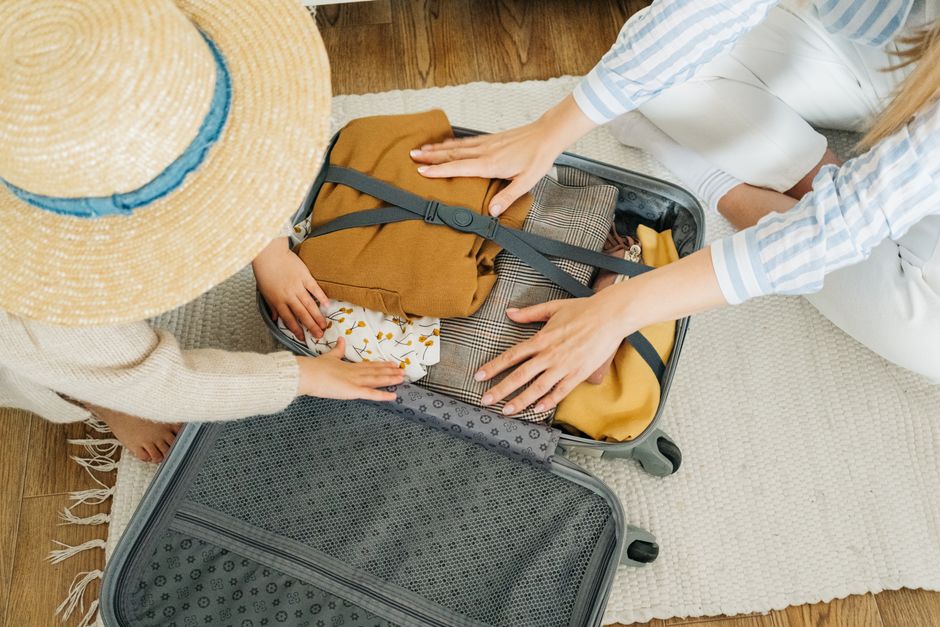
Each packing cube contains one complete outfit: top, bottom, underwear, socks.
Grab one cube, your toddler is dressed. No hunting for matching items. No realising the shorts are in a different bag.
For longer trips, label cubes by day or activity type. 'Day 1', 'Beach outfit', 'Backup'. This also speeds up unpacking and keeps accommodation tidy.
Don't overcomplicate this with colour-coding systems. Simple labels work.
Skip the 'What If' Items (They're Costing You 15 Minutes)
The fancy outfit. The extra shoes. The special occasion clothes packed 'just in case'.
These cost you 15 minutes of deliberation plus extra weight and bulk. Most of the time, you won't use them.
The rule: if you can't name the specific occasion you'll use it, don't pack it. 'What if we go somewhere nice' isn't specific enough. 'We have a restaurant booking on Saturday night' is.
Most destinations have shops. If you genuinely need something unexpected, you can buy it. Give yourself permission to leave the 'what if' items behind.
Some trips genuinely need special items. A wedding, a formal event, a specific activity. Pack for those. But a standard family holiday? You don't need the backup fancy outfit.
Your First Trip With This System Won't Be Perfect (And That's the Point)
Implementing a new system takes practice. Your first attempt won't feel natural.
You'll probably forget something. You might pack something you don't need. That's not failure. That's data. Note what you forgot or didn't use, and refine your zones for next time.
The goal isn't perfection. It's cutting your packing time in half. Even an imperfect first attempt will likely save you 20 to 30 minutes compared to your usual approach.
Start with a short trip to test the system before a major holiday. A weekend away is low-stakes practice. If something goes wrong, you're only away for two days.
At Toddler Vacay, we've helped hundreds of families streamline their travel preparation. The parents who see the biggest time savings are the ones who commit to the system for three trips before judging whether it works. The first trip feels awkward. The second trip feels easier. By the third trip, it's automatic.
Your toddler will still 'help' by unpacking things. They'll still have a meltdown at an inconvenient moment. But you'll be working from a system that removes the decisions that slow you down. That's the difference between 90 minutes of stress and 45 minutes of manageable preparation.
If you're planning your next family trip and want expert guidance on destinations that work well for toddlers, Toddler Vacay specialises in helping families choose and prepare for holidays that actually suit young children. We focus on practical, scored metrics for family-friendly destinations so you're not guessing whether a location will work for your family.